
How to Choose and Vet a Kitchen or Bathroom Remodeler in Maryland, DC and Northern Virginia
The short answer
To choose a kitchen or bathroom remodeling contractor, start by checking their license with the agency that covers your address: the Maryland Home Improvement Commission (MHIC), DC's Department of Licensing and Consumer Protection (DLCP), or Virginia's Board for Contractors. Then get more than one written estimate and talk to references. Before you sign, make sure the contract spells out the scope, materials and payment schedule. In Maryland, the state's guidance is to "Pay no more than 1/3 down as a deposit."
How do you choose a kitchen remodeling contractor?
Picking someone you like is not enough. Vet them. Kitchen and bath remodels involve plumbing, wiring and sometimes walls, so the contractor's license, insurance and paperwork protect you more than any sales pitch can. The steps below follow what the licensing offices in Maryland, DC and Virginia tell homeowners, as of November 2026. They apply the same way whether you're hiring for a kitchen or a bathroom.
- Verify the license with the right state or District office.
- Ask for proof of insurance.
- Talk to references and, where you can, look at finished jobs.
- Get at least two written estimates and compare the scope, not only the total.
- Read the contract before you sign, and keep the deposit within state guidance.
- Settle in writing who pulls the permits.
How do I check a remodeling contractor's license in Maryland, DC or Virginia?
Maryland. Home improvement work needs an MHIC license. The Commission is blunt about it: "It is a crime to act as a home improvement contractor or salesperson in the State of Maryland without an MHIC license." Its advice is to "Ask to see every contractor's MHIC license and then check with MHIC to make sure the license is still current. You may check online or call 1-888-218-5925 (toll free) or 410-230-6231 (Baltimore area)." A number painted on a truck proves nothing. MHIC warns that "An unlicensed contractor may have an invalid or no MHIC number posted on the side of his or her vehicle."
Subcontractors are a separate question. Maryland says "only MHIC licensed contractors may enter into contracts with homeowners to perform home improvement work." Whoever signs your contract is the one who needs the license.
Licensing also gives you a safety net. MHIC runs a Guaranty Fund, and "The maximum recovery for a claim against the Guaranty Fund is $30,000 per claimant, or the amount the homeowner paid to the contractor against whom the Guaranty Fund claim is made, whichever amount is less." That protection only covers licensed work: "The Guaranty Fund is not available to homeowners who hire unlicensed contractors."
Washington, DC. DLCP says "All home improvement contractors are legally required to have a Home Improvement Contractor (HIC) and a Home Improvement Salesperson (HIS) License (or a designated salesperson)." To check, DLCP tells homeowners to use "our online system SCOUT to verify your contractor is licensed". It also suggests you "Ask to see their DLCP-issued Corporate Registration, Business License, and their proof of general liability insurance for their business". DLCP lists a "Surety Bond ($25,000)" among the requirements for a Home Improvement Contractor license.
Virginia. The state Board for Contractors "licenses businesses engaged in the construction, removal, repair, or improvement of facilities on property owned by others." A Virginia license has two parts: "the class of license (A, B, or C), which determines the monetary value of contracts/projects that may be performed, and the classification/specialty, which determines what type of work is allowed." So check two things: that the license is active, and that its class and specialty cover the size and type of your job. For licensing questions, the Board's Licensing Section is at (804) 367-8511. Virginia also runs a Contractor Transaction Recovery Fund, but the Board notes that "Filing a claim does not guarantee payment."
What insurance should a remodeler carry?
Ask for certificates, not promises. MHIC tells Maryland homeowners to "Ask for a copy of the contractor's current general liability insurance certificate." For crews working in your house, MHIC adds that you should "ask to see a copy of a current worker's compensation insurance certificate." State law sets a minimum. Maryland requires "that all Maryland home improvement contractors maintain general liability insurance in the amount of at least $500,000."
Be careful with the phrase "licensed and bonded." MHIC warns: "If a home improvement ad, contract, or vehicle, says "Licensed and Bonded," the individual may not be licensed and has no bond." Check the claim yourself with the licensing office.
How many quotes should you get for a kitchen or bathroom remodel?
Get at least two. That is MHIC's own guidance: "Get at least two bids." DC's DLCP says to "Get estimates from multiple contractors to make sure you're not overpaying".
Bids are only useful if you can compare them. Ask each contractor to price the same scope. Check whether each bid includes design, permits, demolition, electrical and plumbing, and who supplies the cabinets, fixtures and tile. The lowest number often leaves something out. MHIC cautions that "Often an unlicensed contractor will quote a very low price and then demand more money or engage in a "bait and switch" scam." For a sense of what kitchens and baths cost around here, see our DC-metro kitchen cost guide and our Montgomery County bathroom cost guide.
How much deposit should you pay a remodeling contractor?
In Maryland, MHIC's guidance is word for word: "Pay no more than 1/3 down as a deposit. Never pay cash." MHIC also says to "Keep all project documents, including payments, in a job file." Those records count if something goes wrong. The Guaranty Fund asks claimants for "copies of the original contract and all other documents that support the claim".
In DC, DLCP doesn't name a percentage. It recommends you "implement a phased payment timeline where an initial deposit is made, and scheduled payments are submitted according to the project completion deadlines to secure your project and budget."
In Virginia, the Board for Contractors' regulations require a residential contract to state "The amounts and schedule for progress payments, including a specific statement on the amount of the down payment". Whatever state you're in, tie each payment to finished work, not to dates on a calendar.
What should be in a remodeling contract?
Get everything in writing. MHIC says to "Make sure all project material selections are spelled out and signed in a written contract. If you don't understand the contract, have a private attorney review it." DLCP's list is similar: "Put everything in writing, including the timeline, payment schedule, and materials to be used for the project in writing."
A good kitchen or bath contract usually covers:
- The contractor's legal name, address and license number for your jurisdiction
- A detailed scope of work, including what's excluded
- Materials, fixtures and finishes, by name or allowance
- The payment schedule, tied to milestones
- Who obtains permits and schedules inspections
- How changes are priced and approved (written change orders)
- Start and completion expectations
- How disputes are handled
That last point matters in Maryland. If the contract includes a binding arbitration clause, MHIC says "you must make a good faith effort to submit your dispute to arbitration before you may recover from the Guaranty Fund." Read that clause before you sign.
Who pulls the permit, you or the contractor?
The usual answer is the contractor, and you should get that in writing. MHIC's advice: "If your project requires a building permit from your local jurisdiction, confirm that your contractor will obtain all necessary permits."
The rules differ by office. Our kitchen and bath permit guide covers each one. In short, as summarized there: in Montgomery County, homeowners may apply for an alteration permit in their own name, and a contractor needs an MHIC license to get one. In DC, plumbing, mechanical and electrical permits go only to licensed and bonded master trade professionals, and homeowners can't apply for them. In Fairfax County, owners may get permits in their own name with a License Exemption Affidavit, though the county strongly recommends that a licensed contractor pull them. Generally, a remodel needs a permit once it moves plumbing, gas, wiring or walls.
Be wary if a contractor asks you to pull the permit in your own name for work they're doing.
Design-build or a separate designer and trades: which is right for a kitchen or bath?
Both approaches work. The right choice depends on how involved you want to be.
Design-build means one company designs and builds under one contract. You have a single point of contact, design and budget are developed together, and there's one party responsible if something goes wrong. The trade-off is less independent design input.
Hiring a designer and a separate contractor means more coordination on your end, two or more contracts, and the risk that the project comes in over budget once it's priced.
Either way, the vetting steps above still apply to whoever builds the project.
What are the red flags and scams to watch for?
From MHIC and DLCP guidance:
- No license number, or one that doesn't check out. Verify it with the licensing office, not the truck or the ad.
- A price that seems too low. MHIC: "If the deal is too good to be true, it probably is."
- Pressure to decide now. DLCP warns that scams "can involve high-pressure sales tactics, unreasonable pricing, and lack of transparency." MHIC adds: "Don't rush into repairs, no matter how badly they may be needed."
- Cash-only or a large upfront payment. See the deposit section above.
- Targeting older homeowners. MHIC notes that "Elderly homeowners are favorite targets of unlicensed contractors."
- No written contract, or a vague one.
- "You pull the permit."
What questions should you ask at the first meeting?
- What is your license number in my state or the District, and what name is it under?
- Can you send your general liability and workers' compensation certificates?
- Who will be on site day to day, and who is my main contact?
- Do you use subcontractors? Who handles electrical and plumbing?
- Who pulls the permits and schedules inspections?
- Who handles design, and how is it priced?
- What does your payment schedule look like?
- How do you handle changes and surprises found behind the walls?
- Can I talk to recent clients? MHIC suggests asking references whether the contractor finished on time and on budget, returned calls, and "whether they would hire the contractor again."
Where Excell fits
Excell Homes is a design-build remodeler based in Gaithersburg, licensed in Virginia, Maryland and DC. We handle design, permitting and construction under one contract, with a dedicated project manager for each job. In 20+ years and 2,500+ projects, that's the approach we've settled on. See our kitchen remodeling and bathroom remodeling pages, or our Montgomery County kitchen guide. Whoever you hire, use the checklist above. To talk through your project, contact us or call (301) 832-0409.
Frequently asked questions
How do I choose a kitchen remodeling contractor?
Check the contractor's license with the office for your jurisdiction (MHIC in Maryland, DLCP in DC, the Board for Contractors in Virginia) and ask for insurance certificates. Talk to references, get at least two written estimates for the same scope, and read the contract before you sign. Confirm in writing who pulls the permits.
How do I check a remodeling contractor's license in Maryland, DC or Virginia?
In Maryland, check the license with MHIC online or by phone at 1-888-218-5925. In DC, DLCP points homeowners to its SCOUT system. In Virginia, the Board for Contractors licenses contractors by class (A, B or C) and specialty, and its Licensing Section is at (804) 367-8511.
How many quotes should I get for a kitchen or bathroom remodel?
At least two. That's the Maryland Home Improvement Commission's guidance, and DC's DLCP also recommends estimates from multiple contractors. Ask each contractor to price the same scope so you can compare them fairly.
How much deposit should I pay a remodeling contractor in Maryland?
The Maryland Home Improvement Commission says: "Pay no more than 1/3 down as a deposit. Never pay cash." DC's DLCP recommends an initial deposit followed by scheduled payments tied to project completion deadlines.
Who pulls the permit for a kitchen or bathroom remodel?
Usually the contractor, and MHIC advises confirming that your contractor will obtain all necessary permits. In Montgomery County a contractor needs an MHIC license to get one. In DC, only licensed master trade professionals can get plumbing, mechanical and electrical permits.
What should a remodeling contract include?
The scope of work, material selections, payment schedule, timeline, who handles permits, and how changes and disputes are handled. MHIC suggests having a private attorney review any contract you don't understand. In Maryland, an arbitration clause can affect access to the Guaranty Fund.
Is design-build better than hiring a designer and a separate contractor?
Neither is always better. Design-build gives you one contract and one point of contact. Hiring a designer and a separate contractor means more contracts and more coordination on your end.
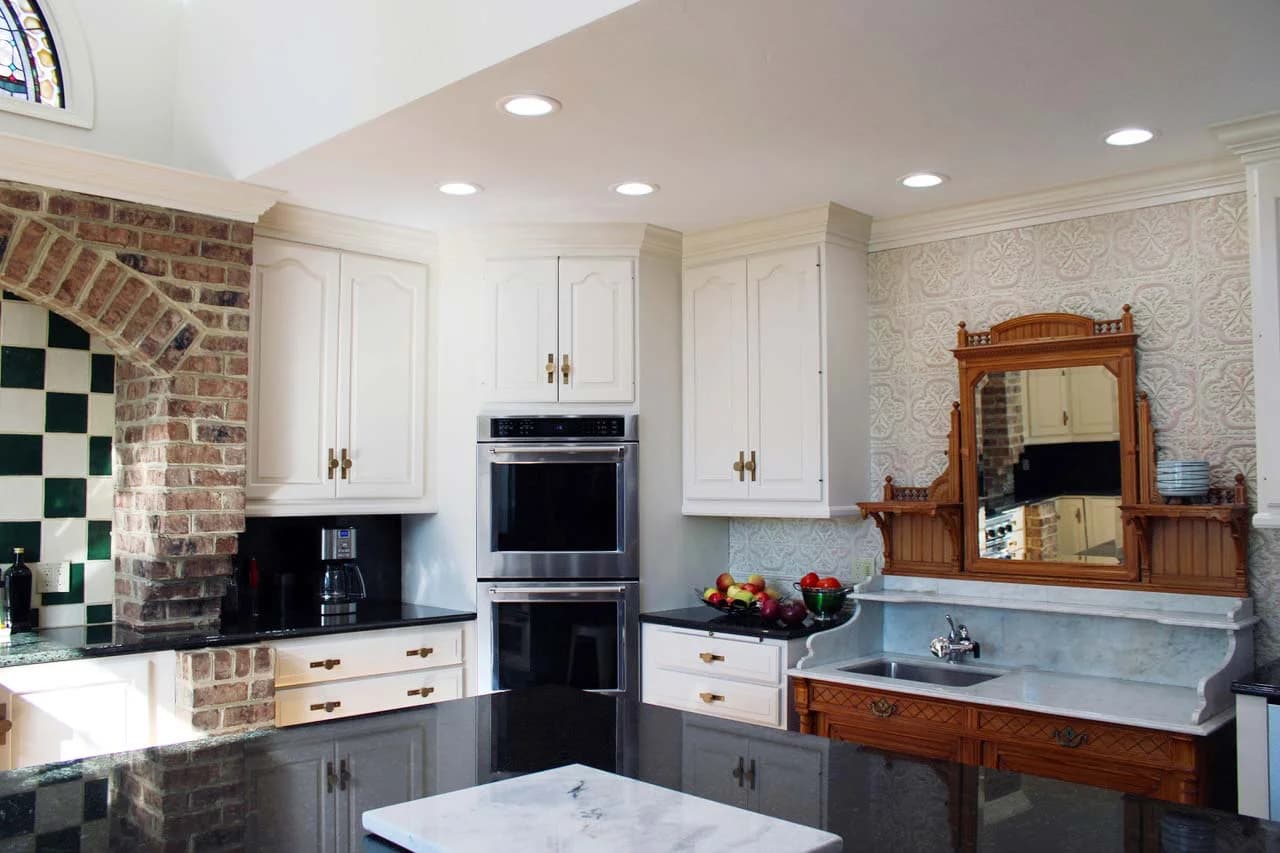
Recent kitchens and baths from our team in Montgomery County, Washington DC and Northern Virginia. Kitchen Remodel in Rockville, MD, Bathroom Remodel in Bethesda, MD, White Kitchen Remodel in Washington, DC, and Kitchen Remodel in Fairfax, VA.
Related guides
- Do you need a permit to remodel a kitchen or bathroom? (DC, MD & VA)
- How much a kitchen remodel costs in the DC metro
- How much a bathroom remodel costs in Montgomery County
Where we build
Excell Homes remodels homes across the DC metro. Explore our work by area:
This guide summarizes what each licensing and consumer-protection office publishes. Everything here is summarized from each office's published guidance as of November 2, 2026. It is not legal advice. Rules change and offices interpret their own rules, so confirm with the office that governs your address, and have a private attorney review any contract you do not understand.