
Remodeling a Kitchen or Bathroom in a DC Condo: Building Rules, Permits and Planning
The short answer
A condo renovation in DC has to meet two sets of rules: your building's and the District's. Before any demolition, ask your management office or board what approval they require. Each building sets its own rules, so get them in writing first. On the city side, finish work generally needs no DC permit outside historic districts, but changing plumbing fixtures, appliances or the layout does, as our permit guide explains.
What will your project cost?
A few quick questions. See what your budget typically covers. We ask for your name, email and phone before showing the results.
Step 1 of 6
Which room are you remodeling?
How is a condo renovation in DC different from remodeling a house?
In a house, the walls, pipes and wiring are yours. In a condo, your unit sits inside a shared structure. The building's governing documents decide where your ownership ends and the association's begins, so ask management for that line in writing before you plan any work.
That changes three things in a kitchen or bathroom remodel:
- Who has to approve it. The city checks the work against code. The board looks at what it means for the building, your neighbors and the building's insurance.
- What you can move. Ask the building whether it allows moving a sink, toilet or shower, and what it requires if it does.
- How the work happens. Deliveries, debris, noise and water shut-offs can all affect other residents, so ask what rules the building has for them.
So start by talking to your building before you choose finishes.
What should you ask your management office or board before you start?
Every building handles this differently, and rules vary from one association to the next. The safest first step is to get the building's renovation rules in writing before you sign with a contractor. The questions below are a starting checklist, not a description of any particular building's requirements.
- Approval. Does the work need board or management approval, and what do you have to submit? Ask whether the answer changes for finish-only work versus moving plumbing or removing a wall.
- Alteration agreement. Does the building use a written renovation or alteration agreement? If it does, read who is responsible for damage to other units and common areas, and have your own advisor review anything unclear. We can't tell you what a particular building's agreement says or means.
- Insurance certificates. What coverage does the building expect your contractor to carry, and does the building need to be named on the certificate? Ask for the exact wording management wants so the certificate is accepted the first time.
- Work hours. When is noisy work allowed, and are weekends or holidays off-limits?
- Elevator and loading. Does the elevator need to be reserved for deliveries and debris, and does it need protective pads? Where can a truck load and unload?
- Water and other shut-offs. Who shuts off water to your unit or riser, how much notice do neighbors need, and does a building staff member have to be there?
- Common-area protection. What protection do hallways, floors and doors need, and who checks them when the job is done?
- Flooring. If you're replacing kitchen or bathroom flooring, does the building have any rules about it?
Write down the answers and give them to every contractor you ask for a quote. Two quotes built on different assumptions about elevator access or work hours are hard to compare.
What should you ask about changing the layout, walls and systems?
Don't assume anything about what's behind your walls or under your floor. Your building's documents and management office can tell you what is shared and what is yours to change. Bring these questions:
- Drains and supply lines. Can a toilet, shower or sink move, and what does the building require if it does?
- Walls. Before you plan to open the kitchen to the living room, ask whether the wall is yours to change and what's inside it.
- Ventilation. Can a range hood or bathroom fan vent outside, or does the building restrict changes to it?
- Electrical. Does the building have any limits on new appliances or lighting circuits, and who should confirm your unit can handle them?
Does a DC condo kitchen or bathroom remodel need a permit?
Often, yes. Whether you need a DC permit depends on what the work changes, not on whether you live in a condo or a house. This summary comes from our guide to kitchen and bath remodel permits, which draws on guidance published by the DC Department of Buildings (DOB).
- Usually no DC permit, outside historic districts: surface work such as painting, wallpapering, new tile or flooring, and replacing cabinets and countertops. Replacing a limited amount of drywall in kind is also on the list, as long as it isn't part of a fire-rated wall.
- Permit needed: interior alterations, new plumbing fixtures, new electric appliances, and installing or replacing gas appliances. For a kitchen or bathroom remodel, the permit type is Alteration and Repair.
- Smaller trade jobs: DOB offers instant permits for limited electrical work, such as a small number of outlets or light fixtures or a single electric appliance. There's also one for installing or replacing a single plumbing fixture. Licensed contractors pull these.
Two points matter for condo owners. First, DC is stricter than the nearby Maryland and Virginia offices about fixtures and appliances, so a kitchen that keeps its layout can still need a permit if the appliances change. Second, a condo remodel that touches walls, plumbing or wiring usually needs both a city permit and building approval. Having one doesn't replace the other.
DOB also runs a Homeowner's Center for smaller interior remodels, kitchens and bathrooms included, when there's no major structural change and no work on load-bearing or party walls. Our permit guide explains what it covers.
Who pulls the permits for a DC condo remodel?
In DC, a property owner can apply for a building permit. Trade permits work differently. Plumbing, mechanical and electrical permits go only to licensed, bonded master trade professionals, and homeowners can't apply for them. In practice, a condo kitchen or bathroom that touches wiring or plumbing needs a DC master electrician or master plumber to pull those permits, as the permit guide explains.
Ask your building whether it wants copies of the permits before work starts and the names of the licensed trades. If you're comparing contractors, our guide on how to choose and vet a remodeler covers how to check a license.
What if your condo building is in a DC historic district?
If your building is in a historic district, the permit rules are less clear. DOB's list of work that needs no permit applies only outside historic districts. Separately, the Historic Preservation Office leaves interior alterations out of its preservation review, unless the interior itself has a specific historic designation.
Neither office's pages explain how those two rules fit together. If your building is in a historic district, check with DOB before assuming even finish work is permit-free. Our permit guide sets out what each office publishes.
How should you plan a condo bathroom remodel?
The bathroom is where a condo remodel is most likely to affect your neighbors, because water runs downhill.
- Ask before moving fixtures. Find out whether the building allows moving a toilet, shower or sink, and what it requires if it does.
- Make waterproofing the priority. In a house, a leak damages your own ceiling. In a condo, it can damage the unit below. Ask how the shower and floor will be waterproofed and tested before the tile goes on.
- Schedule the water shut-off with management. Ask whether the work needs a building-wide shut-off and how much notice neighbors get, so the timing follows the building's rules.
- Check the fan. Find out where the exhaust fan vents and whether the building restricts changes to it.
- Tub or shower? Replacing a tub with a walk-in shower changes the drain and the waterproofing. Our tub-to-shower conversion guide explains what's involved and when it needs a permit.
How should you plan a condo kitchen remodel?
Before you design the kitchen, find out what your building allows, because that sets how much you can change.
- Decide early whether the layout moves. Moving the sink, range or dishwasher means moving plumbing, gas lines or wiring. That needs a DC permit and usually building approval.
- Plan appliances and permits together. In DC, new electric appliances and installing or replacing gas appliances need a permit, so appliance choices belong in the permit discussion from the start.
- Settle the hood question. Find out whether your building allows a hood that vents outside before you plan the cooking wall.
- Plan the lighting. Under-cabinet lights and new fixtures can change how a kitchen feels without changing its footprint. New lighting is electrical work, so check how it fits the permit rules above.
- Plan deliveries. Cabinets, counters and appliances have to fit through the building's doors and elevator, at the times the building allows.
What drives the cost of a condo kitchen or bathroom remodel in DC?
The same things that drive any remodel: the size of the room, whether plumbing and wiring move, the finish level, and what turns up behind the walls. A condo adds building logistics, such as limited work hours, elevator scheduling, common-area protection and coordination with management. For typical ranges and what moves them, see our DC metro kitchen remodel cost guide and our bathroom remodel cost guide. The bathroom guide covers cost drivers that apply across the region.
Where Excell fits
Excell Homes is a design-build remodeling contractor licensed in Virginia, Maryland and DC, with 20+ years and 2,500+ projects behind it. In Washington, DC, we work with condo associations on approval and building rules. Design, permitting and construction are covered by one contract.
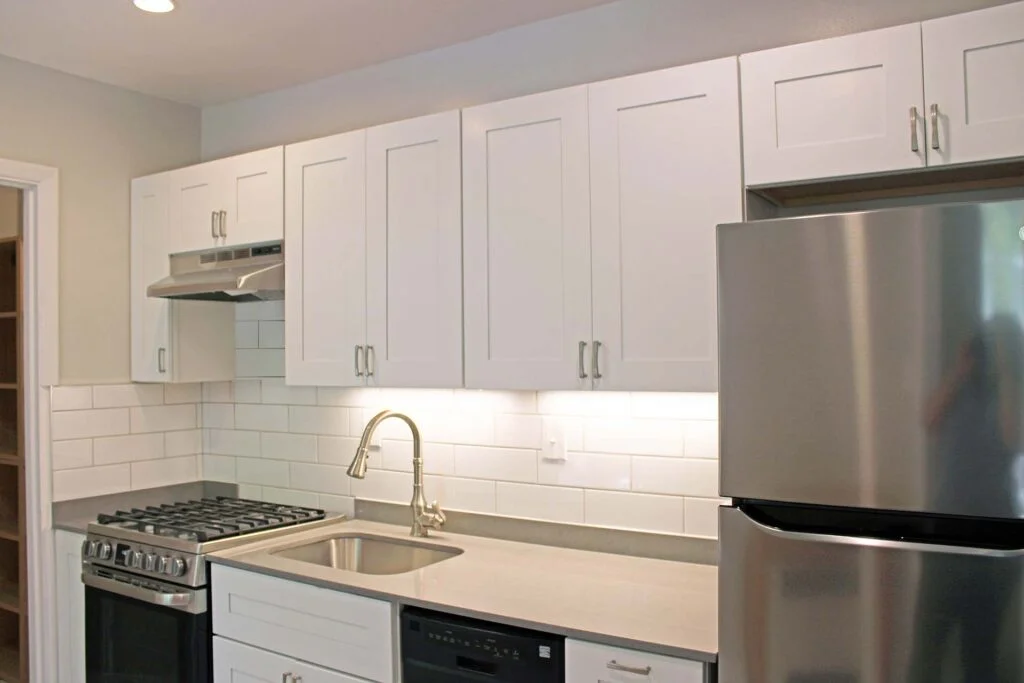
One DC example is our condo renovation in Washington, DC. It was a completed bathroom renovation for an owner who wanted to change the condo's original design intent. We also added features to the kitchen, including new LED under-cabinet lighting and a backsplash. You can also see a white kitchen remodel in DC and our kitchen remodeling and bathroom remodeling pages. To talk through your unit and your building's rules, contact us or call (301) 832-0409.
Frequently asked questions
Do I need my condo board's approval to remodel a kitchen or bathroom in DC?
Often, but it depends on your building. Rules vary by association, so ask your management office or board for its renovation rules in writing before you plan the work or sign with a contractor. Ask whether the requirements are different for finish-only work than for moving plumbing or removing walls.
Do I need a DC permit for a condo kitchen or bathroom remodel?
It depends on the work. Outside historic districts, DC generally doesn't require a permit for finish work such as paint, tile, flooring, cabinets and countertops. Interior alterations, new plumbing fixtures, new electric appliances, and installing or replacing gas appliances need a permit from the DC Department of Buildings.
Can I pull my own permit for a condo remodel in DC?
A DC property owner can apply for a building permit. Plumbing, mechanical and electrical permits, however, go only to licensed and bonded master trade professionals, and homeowners can't apply for them. A remodel that touches wiring or plumbing therefore needs a DC master electrician or master plumber to pull those permits.
Can I move the toilet, shower or sink in my DC condo?
It depends on your building and what your board allows. Moving a fixture also means moving plumbing, which needs a DC permit, so ask management early whether a layout change is possible.
What if my condo building is in a DC historic district?
DOB's list of permit-free work applies only outside historic districts. The Historic Preservation Office leaves interior alterations out of its own review unless the interior has a specific historic designation. Because neither office explains how those rules fit together, check with DOB before assuming even finish work is permit-free.
What should I ask building management before a condo renovation?
Ask about the approval process, any alteration agreement, the insurance certificates your contractor must provide, allowed work hours, elevator reservations and protection, and water shut-off procedures. Also ask about common-area protection. Get the answers in writing and share them with every contractor who quotes the job so the quotes can be compared.
Kitchens and bathrooms we have remodeled in Washington, DC, including a condo. Condo Renovation in Washington, DC, White Kitchen Remodel in Washington, DC, and Marble-Look Bathroom Remodel in Washington, DC.
Related guides
- Do you need a permit to remodel a kitchen or bathroom? (DC, MD & VA)
- How much a kitchen remodel costs in the DC metro
- How to choose and vet a kitchen or bathroom remodeler
Where we build
Excell Homes remodels homes across the DC metro. Explore our work by area:
DC permit information in this guide comes from our kitchen and bath permit guide, which is summarized from each office's published guidance as of November 2026. Condo building rules vary by building and are set by each association's own documents, so ask your management office or board before you plan. This is not legal advice. Rules change, so confirm with the DC Department of Buildings and your building before starting work.