
Remodeling a Shower (Not a Tub): Options, Tile vs Panels, and What Changes the Scope
The short answer
How to do a shower remodel comes down to one early decision. You can keep the shower where it is and replace what you see, or you can strip it to the framing and rebuild it, which may mean moving the valve or the drain. After that you choose the wall surface, the base, the enclosure and the valve. Moving plumbing is what usually brings in a permit, and in older DC-area homes you often can't see the full scope until the old walls come off.
What will your project cost?
A few quick questions. See what your budget typically covers. We ask for your name, email and phone before showing the results.
Step 1 of 6
Which room are you remodeling?
How to do a shower remodel: refresh or full replacement?
- Refresh. The footprint, valve and drain all stay. The work might be new trim and a new showerhead, regrouting, fresh sealant, or glass in place of a curtain. A refresh makes sense when the walls are solid and dry and the problem is mostly the look. It can't fix anything behind the surface.
- Full replacement, same footprint. The wall surface and the base come out down to the studs and subfloor. New waterproofing, a new base and new walls go in. With the wall already open, this is the natural time to replace the valve body too. This is what most people mean by a shower remodel.
- Full replacement with a new layout. The valve moves to another wall, the drain moves, or the stall gets bigger. Water lines and the drain then have to be rerun under the floor or in the wall, and it's the change most likely to need a permit.
In general, keeping the valve and drain where they are is the simpler path, and moving them is where scope and cost tend to grow. Our Montgomery County bathroom cost guide explains how plumbing changes and the choice between a refresh and a gut move the budget. This guide gives no shower prices because they depend so much on the house.
Some signs suggest a refresh won't be enough:
- tiles that sound hollow or feel loose
- grout that keeps cracking in the same places
- a base that flexes underfoot
- a musty smell that doesn't go away
- stains on the ceiling below
Any of these can mean water is getting behind the surface, but only opening the wall will confirm it.
If you're turning a tub into a shower, or you want a curbless entry, a bench, niches or a linear drain, see our tub-to-shower conversion guide.
How big does a shower need to be?
If you keep the existing footprint, the size is mostly settled already. If you're enlarging the stall or changing the layout, a widely used model code sets minimums. The 2021 International Residential Code says “Shower compartments shall have not less than 900 square inches” of interior area. It also says “Shower compartments shall be not less than 30 inches (762 mm) in minimum dimension measured from the finished interior dimension of the shower compartment”. The same section lists exceptions, so read all of it if your plan is close to those minimums.
It helps to know what kind of document this is. The International Residential Code is a model code published by the International Code Council. It has no force anywhere until a jurisdiction adopts it, and DC, Maryland's counties and cities, and Virginia each adopt their own edition with their own amendments. Plumbing may also be reviewed by a different agency than the rest of the building work. Treat these figures as a reference point, not as the rule for your address, and confirm with your permit office. None of this is legal advice.
If your older stall is smaller than these figures, ask the permit office whether replacing it in place has to meet current size rules before you plan around the existing footprint.
Tile or panels: which wall option fits your shower?
Either one can make a good shower. The differences come down to look, seams, installation and upkeep, and they vary a lot from product to product. Read the points below as general tendencies, not rules.
Tile gives you the most choice in looks: large-format porcelain, small ceramic, stone-look, patterns and accent bands. It wraps easily around niches, ledges and awkward corners. The trade-offs are labor and grout. Setting tile takes skilled work, grout lines need regular cleaning, and some grouts also need sealing from time to time. Larger tiles mean fewer grout lines, but they need flatter walls, and older houses don't always have them.
Panels are large sheets that cover a wall with few or no grout lines. Their main appeal is fewer seams to clean and often a simpler installation. The trade-offs:
- fewer looks to choose from
- visible trim or sealed joints at corners and edges
- less room for built-in niches, unless the panel system is designed for them
Some panels can go over certain existing surfaces and some can't. That depends on the manufacturer's instructions and on what's behind the old wall.
With either option, ask the installer how the corners, the edges and the joint with the base will be sealed, and what cleaning the surface needs. Whatever you put on the walls, what keeps water out of the framing is the waterproofing layer behind it and the slope of the floor to the drain. Ask any installer to explain how they handle both.
What are the shower pan and base options?
The base, sometimes called the pan, is the floor of the shower. There are three broad approaches:
- Prefabricated base. This is a one-piece molded base in a set size and shape. It takes less labor to install and leaves few seams on the floor. The catch is size: these bases come in standard dimensions, so an older stall with an unusual footprint may need framing changes or a different approach.
- Tiled base built on site. A sloped bed is built over a waterproof liner or membrane and then tiled. It fits any size or shape, and it works with small tiles such as hex or mosaic, which follow the slope and give more grip underfoot. It takes more labor, and the result depends heavily on the installer.
- Pre-sloped, tile-ready tray. This is a factory-made sloped base that gets waterproofed and then tiled over. It falls between the other two: you get a tiled floor with a factory-made slope.
If you keep the drain where it is, the base has to work with that location. Moving the drain to fit a particular base is a plumbing change, and it brings the scope and permit questions that come with one.
Glass enclosure, door or curtain?
- Curtain: the most flexible option and the easiest to change later.
- Framed glass: metal runs around the edges.
- Frameless glass: minimal hardware, and it tends to cost more than framed.
- Fixed glass panel: a panel with an open end, for larger showers that don't need a door.
- Sliding doors: save swing space in a tight bathroom.
- Hinged doors: need clear floor space in front. The 2021 IRC says “Hinged shower doors shall open outward.” Again, that's model-code language your jurisdiction may adopt with its own changes.
Custom glass is usually measured after the walls and base are finished.
Which shower valve should you choose?
The valve sits inside the wall and mixes the hot and cold water. The handle and plate you see are called the trim. Trim is usually made for a specific valve body, so new trim on an old valve only works if the two match. Replacing the valve body means opening the wall, which is why it's so often done during a full replacement.
The 2021 IRC says “Individual shower and tub/shower combination valves shall be balanced-pressure, thermostatic or combination balanced-pressure/thermostatic valves”. It also says “Shower and tub/shower combination valves required by this section shall be equipped with a means to limit the maximum setting of the valve to 120°F (49°C)”.
In plain terms, a pressure-balancing valve reacts when water pressure changes, for example when someone flushes a toilet elsewhere in the house. A thermostatic valve holds the temperature you set. Ask your local permit office which edition and amendments apply to your home.
What changes the scope in an older DC-area home?
Many DC-area homes are old enough that a shower can look fine and still hide problems. You can't confirm any of these from the outside. They come to light only once the walls and floor are open:
- Water damage. Rot in the studs or subfloor, or mold behind the surface, caused by a slow leak at the valve, the drain or failed grout.
- Older plumbing. Supply or drain piping in older houses is sometimes dated, corroded or altered by past work, and the existing valve may not be a match for new trim or current code. Once the pipes are exposed, more of the rough plumbing may need work than the visible shower suggested.
- Framing and floors. Walls that aren't plumb and floors that aren't level, which affect how tile, panels and glass fit.
- Earlier repairs. Layers of old tile, patched surfaces or past work that has to come out before the new shower goes in.
Because these problems show up during demolition, ask how a quote handles hidden conditions before you sign: what's included, and how changes are priced and approved. Our guide to choosing and vetting a remodeler lists the questions to ask. The bathroom cost guide suggests setting aside a contingency for conditions found once the walls are open.
Do you need a permit to remodel a shower?
It depends on what changes and where you live. Our kitchen and bathroom permit guide covers each jurisdiction in detail. Here's how it applies to a shower, as of November 2026:
- Moving the valve or drain. This is generally permit work in every jurisdiction the guide covers, because it changes the plumbing.
- Montgomery County. WSSC Water issues plumbing permits, not the county's Department of Permitting Services (DPS). The guide couldn't check WSSC's own pages, so it recommends asking WSSC directly whether a like-for-like shower valve swap needs a permit rather than assuming it doesn't. The cities of Rockville and Gaithersburg run their own permitting. In Rockville, the plumbing permit may come from the City or from WSSC, depending on which one supplies the water.
- Washington, DC. New plumbing fixtures and interior alterations need a permit. Only licensed master plumbers can pull plumbing permits there; homeowners can't.
- Fairfax County and Virginia. Virginia's statewide code exempts swapping a plumbing fixture as long as the water supply, drain and vent systems aren't altered. Fairfax exempts like-for-like replacements in the same location. Fairfax also lists bathroom remodels and new, repaired or relocated fixtures, showers included, as permit work, so check with the county before assuming a full shower replacement is exempt.
Before work starts, confirm the rules with the office that governs your address. This is a summary, not legal advice.
Where Excell fits
Excell Homes is a design-build remodeler licensed in Virginia, Maryland and DC and has 20+ years and 2,500+ projects behind it. Its bathroom remodeling work includes custom tile and niches, frameless glass enclosures, and the plumbing upgrades that go with them, with design, permitting and construction under one contract.
Shower examples from its project pages:
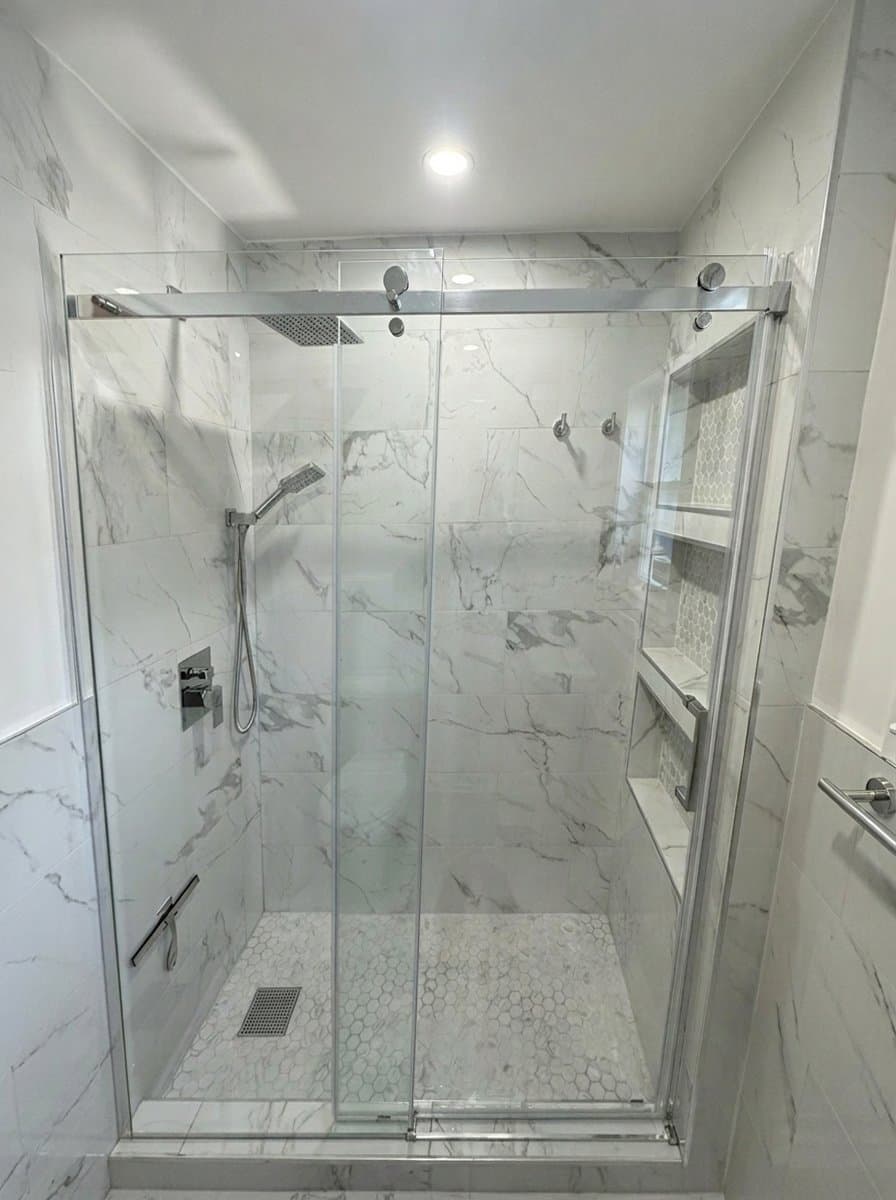
- Marble-Look Bathroom Remodel in Washington, DC: marble-look porcelain on the walls and floors, a glass-enclosed shower with built-in niches, and a textured hexagonal shower floor.
- Bathroom Remodels in Springfield: a secondary-bath shower in white ceramic with gray details, and niches in both bathrooms.
- Bathroom Remodel in Bethesda: a primary bathroom redesign, plus updates to the home's other bathrooms.
To talk through your shower, call (301) 832-0409 or send a message.
Frequently asked questions
How do you do a shower remodel without replacing the tub?
First decide whether you're refreshing the shower or replacing it. A refresh keeps the footprint, valve and drain and updates what you see. A full replacement strips the shower to the framing and rebuilds the waterproofing, base and walls. If a tub isn't part of the project, the work stays shower to shower, and the main question is whether the valve or drain has to move.
Is it worth remodeling a shower instead of just refreshing it?
A refresh can work well when the walls are solid and dry. Hollow-sounding tiles, grout that keeps cracking, a base that flexes or stains on the ceiling below can all mean water is getting behind the surface, and a refresh won't fix that. Only opening the wall confirms what's there.
Are shower wall panels better than tile?
Neither is better in every case. Tile gives you more looks and fits easily around niches and odd corners, but it takes more labor and the grout needs cleaning. Panels have fewer seams and are often simpler to install, but they come in fewer looks and need careful sealing at corners and edges. With either one, the waterproofing behind the wall is what keeps water out of the framing.
How big does a shower have to be?
The 2021 International Residential Code, a model code, sets a minimum interior area of 900 square inches and a minimum dimension of 30 inches, with some exceptions. Your jurisdiction adopts its own edition with its own amendments. Confirm with your permit office before you plan a new layout.
Do I need a permit to replace a shower?
Moving the valve or drain is generally permit work. In Montgomery County, WSSC Water issues plumbing permits, so ask WSSC whether a like-for-like valve swap needs one. In DC, new plumbing fixtures need a permit pulled by a licensed master plumber. Virginia exempts fixture swaps that don't alter the supply, drain or vent systems, while Fairfax lists bathroom remodels as permit work.
What can go wrong when remodeling a shower in an older home?
Once the walls and floor are open, you may find rot or mold from a slow leak, dated or corroded piping, out-of-level floors, or layers of earlier repairs. None of this can be confirmed before demolition. That's why it helps to ask how a quote handles hidden conditions and to budget a contingency.
What kind of shower valve should I get?
The 2021 IRC calls for pressure-balancing, thermostatic or combination valves with a way to limit the maximum setting to 120°F. A pressure-balancing valve reacts to changes in water pressure, and a thermostatic valve holds a set temperature. Replacing the valve body means opening the wall, so it's often done during a full replacement.
Sources
The code quotes on this page come from the model code's published text, checked on the date shown. Permit and Excell facts come from the site pages linked above.
Model code cited: 2021 International Residential Code, Chapter 27 (P2708.1) (checked Nov 10, 2026)
Recent bathrooms from our team, from glass-enclosed showers with niches to a tub space turned into a custom shower: Marble-Look Bathroom Remodel in Washington, DC, Bathroom Remodels in Springfield, VA, Bathroom Remodel in Bethesda, MD, and Bathroom Remodel in Rockville, MD.
Related guides
- Do you need a permit to remodel a kitchen or bathroom?
- What drives bathroom remodel cost in Montgomery County
- Tub to walk-in shower conversion guide
Where we build
Excell Homes remodels homes across the DC metro. Explore our work by area:
Permit rules are summarized from each office's published guidance as of November 2026, and this is not legal advice. The International Residential Code is quoted as a model code from the International Code Council. Your jurisdiction adopts its own edition and amendments, and plumbing may be reviewed by a different agency than building work, so confirm what applies with the permit office for your address before you start.